

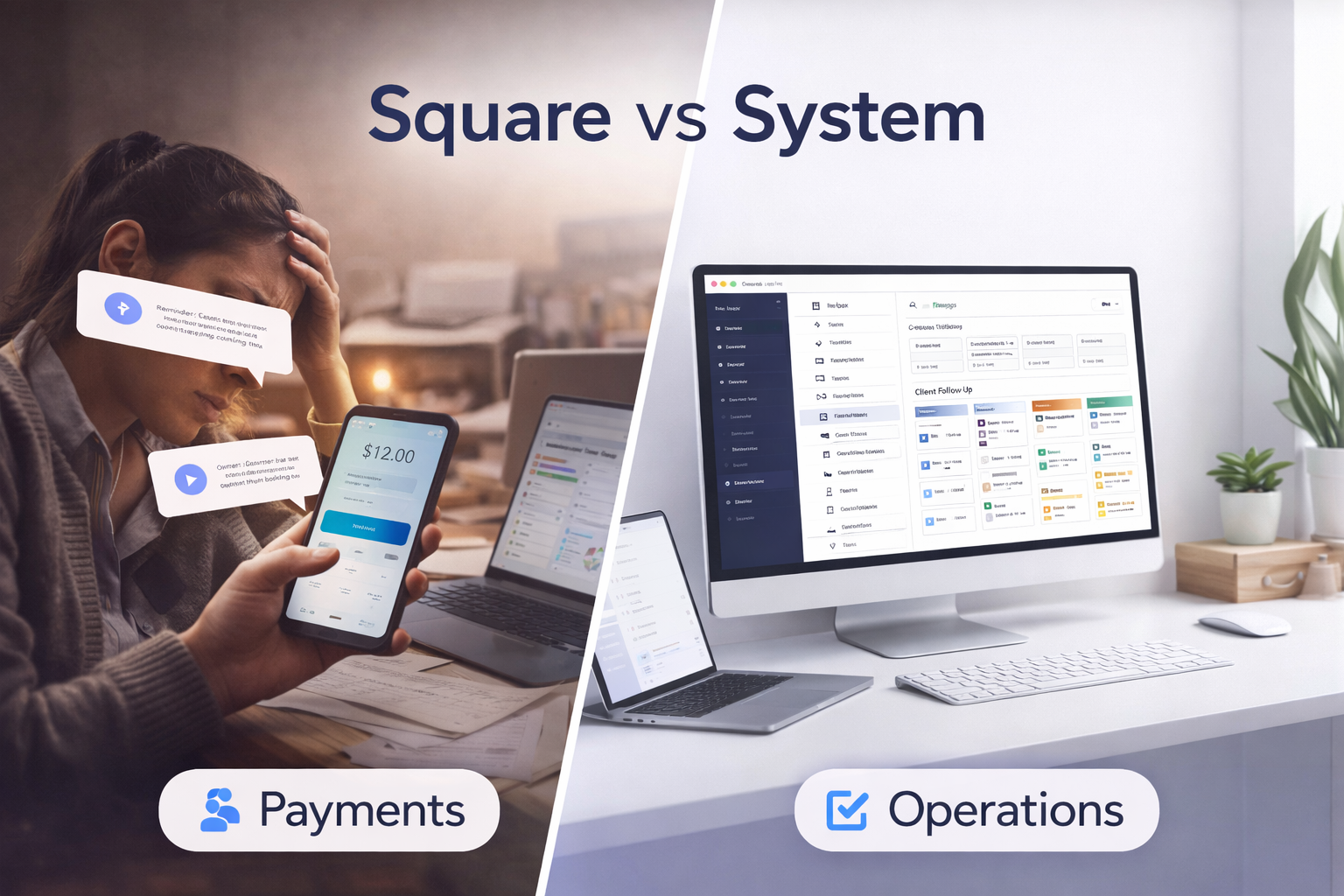
Square vs business management system becomes clear the moment a business starts to grow, because what once felt simple and efficient begins to feel scattered, reactive, and harder to manage.
For example, a structure beauty studio management system allows service-based businesses to track clients, manage appointments, and maintain full operational visibility in one place.
There’s a point in most businesses where the tools that once felt like a breakthrough start feeling like a limitation.
At the beginning, platforms like Square are a relief. They make it possible to accept payments quickly, send invoices, and start getting revenue without needing complicated setups. For a lot of small businesses, that simplicity is exactly what makes it attractive. You don’t have to think too much about infrastructure. You just need a way to get paid.
And in that role, Square is excellent.
But eventually something happens that catches a lot of business owners off guard.
The business grows.
More clients come in. More conversations happen. More quotes are sent. Work begins to overlap. Follow-ups start stacking up. Tasks spread across different tools. Messages get buried. Payments are coming in, but the rest of the business starts feeling harder to manage.
From the outside everything looks good.
Inside, things feel messy.

This is usually the moment when business owners start asking questions like:
- Is Square enough to run my business?
- Do I need a CRM?
- What software actually manages the whole business?
- Why does everything still feel chaotic even though I have good tools?
The answer is rarely about Square being bad software.
The real issue is that Square was never designed to run the entire business.
It was designed to handle transactions.
And there’s a big difference between processing payments and operating a business.
This article breaks down that difference, why many small businesses eventually outgrow payment-first tools, and what’s actually missing when operations start feeling disorganized.
What Square Actually Does Well
Before talking about limitations, it’s important to acknowledge something: Square is popular for a reason.
It solves a real problem extremely well.
For many businesses, the early stage looks something like this.
You need to start accepting payments quickly.
You don’t want to deal with complicated merchant accounts.
You want invoices to look professional.
You want customers to pay easily.
Square handles that smoothly.
You can:
• accept card payments
• send invoices
• track transactions
• run a point-of-sale system
• see simple revenue reports
For many small businesses, that’s enough in the early days.
If your business is still small, if your services are simple, and if most of your workflow lives in your head, Square can feel like it’s doing everything you need.
At this stage, the difference between square vs business management system isn’t obvious yet, because the focus is simply on getting paid and keeping things moving.
The challenge begins when the business starts moving faster.
Not just financially.
Operationally.
Because running a business involves far more than transactions.
Square vs Business Management System: Payments vs Operations
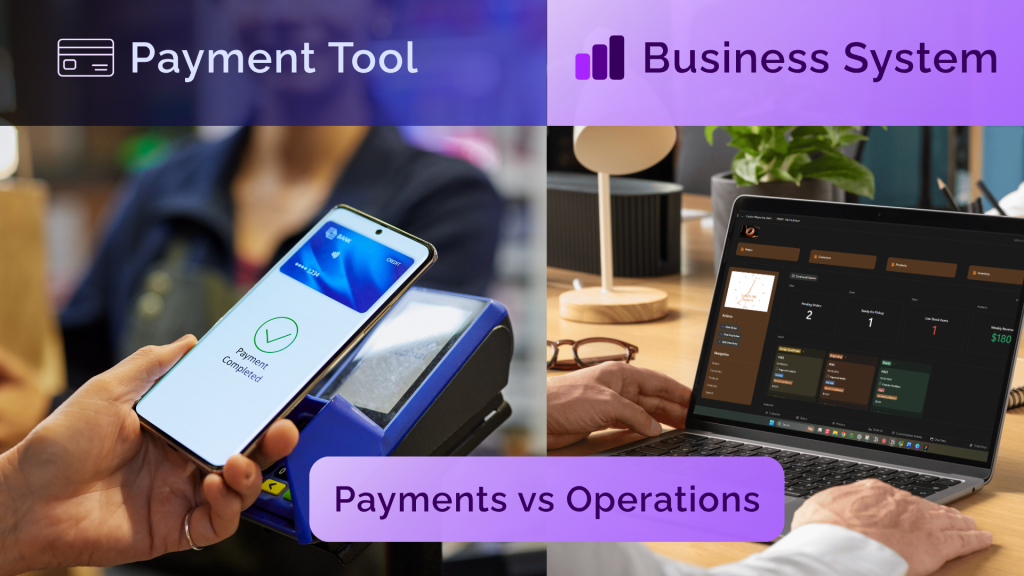
This is where the gap between square vs business management system becomes impossible to ignore.
According to the U.S. Small Business Administration, businesses that implement structured systems are more likely to maintain stability as they grow.
A payment platform manages financial events.
A business management system manages business flow.
Those two things are related, but they’re not the same.
This is where the distinction between square vs business management system becomes critical, because one is built to process transactions while the other is designed to manage the full flow of operations across the business.
Let’s look at what actually happens in most small businesses before a payment ever occurs.
A lead reaches out.
Maybe they send a message through social media. Maybe they fill out a form. Maybe they call. Maybe they come through a referral.
Then the conversation begins.
Questions get asked. Pricing gets discussed. A quote might be prepared. There may be back-and-forth messages. The lead might go quiet for a few days. Someone needs to follow up.
Eventually the person decides to move forward.
Then the payment happens.
From Square’s perspective, that transaction is the event.
But from the business perspective, the payment is actually the middle of the process.
Because after the payment comes onboarding, scheduling, task management, delivery, client communication, and sometimes repeat business.
In other words, Square manages a moment.
A business operating system manages the entire journey.
And when that journey isn’t clearly structured, the owner ends up carrying most of it mentally.
Where Things Start Feeling Disorganized
The biggest signal that a business has outgrown its payment-only setup isn’t usually financial.
It’s operational.
Business owners start noticing patterns like these.
Square vs business management system becomes a real challenge at this stage, because as the business grows, relying on disconnected tools makes it harder to track leads, manage tasks, and maintain clear visibility across operations.
A lead messages you and you respond quickly. They ask for pricing. You send it. They say they’ll think about it.
A few days later you realize you forgot to follow up.
You scroll through messages trying to find the conversation again.
Or someone asks how business is going.
You know you’ve been busy. You’ve been working constantly. But when you think about how many active leads you have or what revenue is expected next week, you’re not completely sure.
Or maybe you hire someone to help.
They start asking questions.
Which clients need follow-ups?
Who hasn’t paid yet?
What projects are active?
What’s the next step for this lead?
If the answers live across multiple apps, message threads, or inside your memory, things start slowing down.
Not because the business is failing.
Because the structure hasn’t caught up with the growth.
And this is where many owners realize that something is missing.
The Tool Stack Most Businesses End Up With

When businesses start feeling this pressure, the instinct is usually to add more tools, not replace Square but add to it. What begins as a simple setup quickly turns into a growing stack, where each tool solves one part of the business but none of them manage the whole.
So a typical stack begins to form.
Square handles payments.
A scheduling tool handles bookings.
Maybe another platform manages contracts.
A spreadsheet tracks leads.
A messaging platform holds conversations.
Project tasks might live somewhere else.
Individually, each tool works well, and on its own, each one feels like a solution. But together, they create a fragmented system where information is scattered and the business starts to feel harder to manage, not easier.
This is where square vs business management system becomes more than a comparison, because adding more tools doesn’t create structure—it creates more places for information to live without a single place to understand it.
Information gets spread across different places, and instead of working from one clear system, you start checking multiple dashboards just to understand what’s happening today. You might have great tools, but you don’t have a center, and without that center, the owner becomes the system holding everything together.
Square vs business management system becomes a critical shift for small businesses once operations start to outgrow simple tools and require real structure, because without a centralized system, the business depends entirely on the owner to keep everything connected and moving forward.
You are the one connecting the dots. You remember which lead needs follow-up, you know which client paid, and you know which project is active. You keep the business running by mentally stitching everything together.
That works for a while.
Until it doesn’t.
The App Illusion
One of the most common traps small businesses fall into is the idea that the right combination of apps will eventually solve operational chaos, and at first, that belief feels completely logical because each tool improves a specific part of the business.
It seems logical.
If scheduling feels messy, improve scheduling.
If payments feel messy, improve invoicing.
If communication feels messy, improve messaging.
But solving isolated problems doesn’t always create a cohesive system, and in many cases, it actually increases fragmentation because each new tool adds another layer without connecting the overall flow of the business.
This is where square vs business management system becomes a real issue, because adding more apps doesn’t create structure—it simply spreads operations across multiple tools without a single place to manage them.
Because every tool manages its own slice of the business, the system becomes divided instead of unified, and what starts as helpful quickly turns into something harder to control.
One manages payments.
One manages bookings.
One manages tasks.
One manages contacts.
And none of them are responsible for managing the entire business flow.
The result is a business that technically has good tools but still feels disorganized, not because the tools are bad, but because the system connecting them is missing.
What a Real Business Management System Actually Does (Beyond Square)
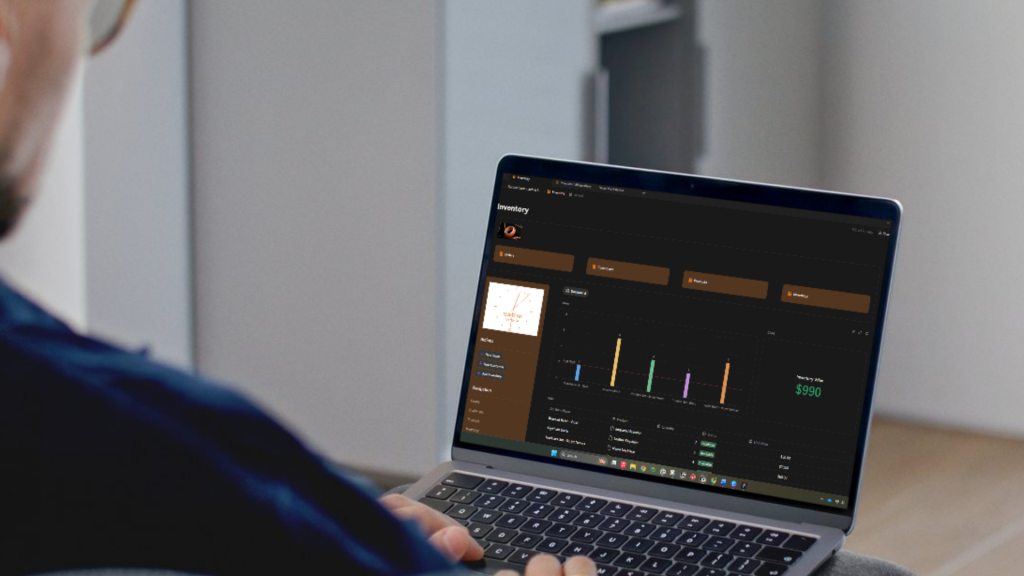
This is where square vs business management system becomes more than a comparison and starts becoming a decision about how the business is actually run.
A real business management system isn’t just a tool.
It’s the structure that connects the business together.
Instead of managing individual events like payments or bookings, it organizes the flow of work across the entire business.
That includes things like:
Lead pipelines
Task ownership
Client onboarding
Project progression
Revenue visibility
Operational dashboards
Automation tied to real milestones
Instead of everything living in separate apps, the system becomes the place where the business is actually managed.
Think of it as the command center.
Not where transactions happen.
Where the business is understood.
A business management system allows an owner to answer simple but powerful questions instantly:
How many leads are active right now?
Which ones need follow-up?
What work is currently in progress?
What tasks are overdue?
What revenue is expected soon?
What needs attention today?
When those answers exist in one place, the business starts feeling calmer.
Not because the work disappears.
Because the structure becomes visible.
This is the same structure used in a beauty studio management system, where appointments, revenue, and operations are aligned.
Why Payment Platforms Can’t Fill This Role
It’s not a design flaw.
Payment platforms simply aren’t built for operational oversight.
Their core responsibility is financial transactions.
They track payments, invoices, and basic reporting.
But they don’t typically manage:
This is where square vs business management system becomes clear, because payments alone can’t manage everything happening behind the scenes.
lead progression
internal workflows
team tasks
project status
operational visibility
And they’re not meant to.
That’s why businesses often feel confused when they try to use payment software as their central system.
The software is doing its job perfectly.
It’s just not responsible for the rest of the business.
The Moment Businesses Realize They Need Structure
This is where the difference between square vs business management system becomes obvious.
There’s usually a moment where the owner notices something.
They’re working constantly.
Clients are coming in.
Revenue exists.
But the business still feels heavier than it should.
You’re checking multiple tools.
You’re tracking conversations manually.
You’re trying to remember who needs follow-up.
You’re answering the same operational questions repeatedly.
And eventually you think:
“This shouldn’t feel this complicated.”
That thought is often the beginning of a structural shift.
Because the real problem isn’t effort.
It’s the absence of a unified system.
Why Many Business Owners Start Looking for Operating Systems
Over the last few years, more business owners have started looking beyond individual apps.
Choosing between Square vs business management system setups isn’t just about tools, it’s about how the business actually runs day to day.
Instead of searching for one more tool, they’re asking a different question.
What system actually runs the business?
Not just payments.
Not just scheduling.
The entire operational flow.
That’s where the concept of a business operating system begins to make sense.
An operating system doesn’t replace every tool.
It connects them.
It creates a structure where leads move through clear stages, tasks are visible, automation runs cleanly, and the owner has a clear view of what’s happening.
Instead of juggling apps, the business finally has a center.
The Operational Layer Most Businesses Are Missing
Think about how most businesses actually run.
Leads enter the business through different channels.
Those leads move through stages.
Tasks get assigned.
Work gets delivered.
Clients communicate.
Payments happen.
Follow-ups occur.
Some clients return.
All of those things form a workflow.
When that workflow is invisible, the owner becomes responsible for managing it mentally.
When that workflow is structured, the system carries most of the load.
This is the operational layer most small businesses eventually need.
And it’s the layer that tools like Square were never meant to provide.
This is where square vs business management system becomes less about tools and more about how the business actually operates day to day.
Where Systems Like KyznOS Fit
This is exactly the gap systems like KyznOS are designed to solve.
Instead of trying to replace every existing tool, KyznOS sits above them and organizes the business flow.
Square can continue handling payments.
Scheduling tools can continue handling bookings.
But the business itself becomes structured inside a centralized system.
For many owners, square vs business management system becomes less of a comparison and more of a turning point in how the business is actually run.
Leads are tracked in a pipeline.
Tasks have ownership.
Projects move through defined stages.
Automation runs based on real milestones.
The owner finally has a clear operational dashboard instead of scattered information.
The goal isn’t to replace good tools.
The goal is to connect them in a way that actually makes the business manageable.
The Real Benefit: Operational Clarity
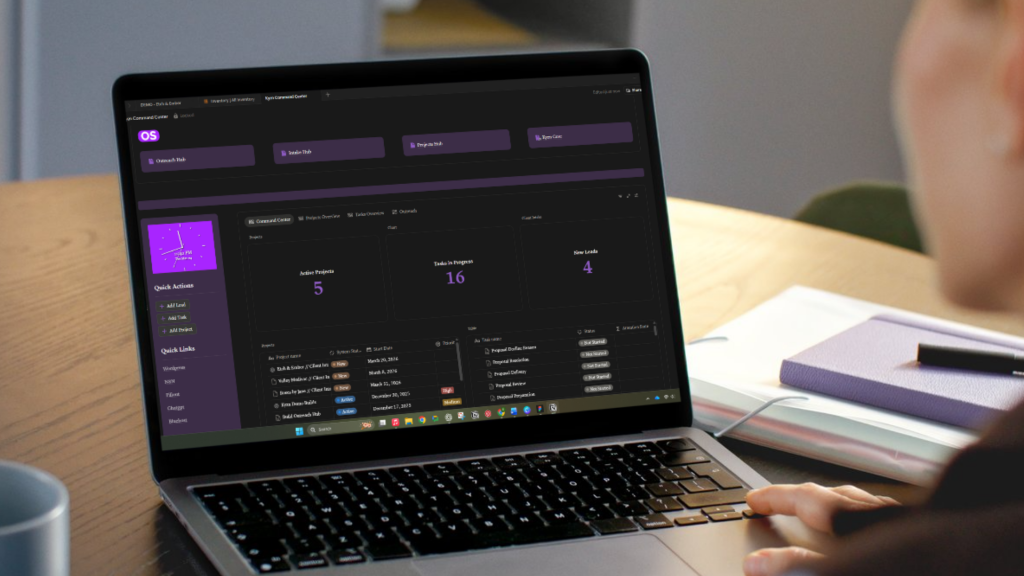
At the end of the day, most business owners don’t wake up wanting more software.
They want clarity.
They want to know:
What’s happening in the business.
What needs attention.
What revenue is coming.
What tasks are open.
What opportunities exist.
And they want to know those things without checking five different tools.
That clarity is what turns a chaotic operation into a controlled one.
And that’s why the conversation around business systems has become so important.
Because growth without structure eventually creates friction.
But growth with structure creates momentum.
The Bottom Line
Understanding square vs business management system helps business owners make better operational decisions.
Square is an excellent payment platform.
For handling transactions, it’s one of the easiest tools available for small businesses.
But processing payments and operating a business are two different responsibilities.
As businesses grow, the need for operational structure becomes more obvious.
Leads need to be tracked.
Tasks need ownership.
Projects need visibility.
Automation needs real workflows.
And the owner needs a clear place to see what’s happening across the business.
That’s the role of a real business management system.
Not replacing good tools.
Connecting the business around a structure that actually works.
Because the goal isn’t just to get paid.
The goal is to run a business that feels organized, predictable, and scalable.
And that only happens when the system behind the business is designed to carry the weight of growth.
At its core, square vs business management system is a distinction between transactions and true business operations.